
The Contrasting Picture of Da Nang's Real Estate Market
2025-09-19

In July 2025 in Da Nang, the land plot and townhouse/villa segments saw a decrease in supply, low liquidity, and stable prices; meanwhile, the apartment segment experienced a sharp increase in both supply and sales volume; and resort real estate remained quiet with almost no transactions...
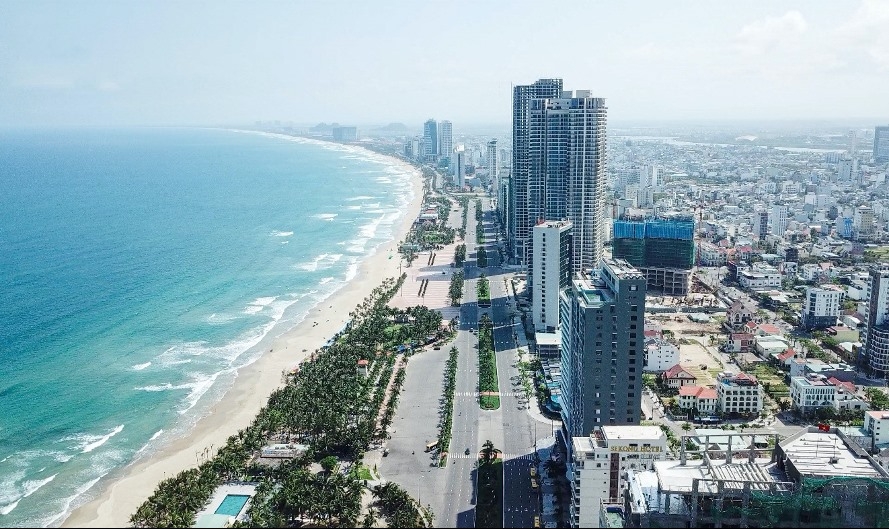
According to the July 2025 Da Nang real estate market report by DKRA Consulting, the apartment segment showed a 33% year-on-year increase in primary supply, while new supply surged nearly 4 times. Demand improved noticeably, with consumption reaching 3.5 times that of the same period in 2024. Notably, liquidity concentrated in projects newly launched during the month, accounting for 51% of total consumption.
However, the supply structure showed an imbalance among segments, as luxury and grade A apartments accounted for 78% of total primary supply. Primary prices remained largely stable and stayed high, whereas the secondary market continued to recover, with average prices increasing by 3 - 5% compared to early 2025.
LAND PLOTS AND VILLAS FACE SCARCE NEW SUPPLY
Meanwhile, the land plot segment in July 2025 recorded a primary supply of 1,554 plots, down 12% year-on-year, primarily coming from previously launched projects. New supply remained scarce, accounting for only 8% of the total primary supply share.
Demand was generally low, with sales volume equivalent to 4% of the total primary supply. Cam Le ward and Nui Thanh commune were the two leading localities in transactions. In the primary market, prices remained flat and stayed high due to input costs. In the secondary market, prices increased by an average of about 3%.
Regarding townhouses and villas, primary supply decreased by approximately 22% year-on-year, mainly from existing inventory; new supply continued to be scarce. Demand improved slightly but remained low. Transactions concentrated in large projects with clear legal status, with selling prices ranging from 15 to 20 billion VND per unit.
Ngu Hanh Son Ward leads in primary supply (accounting for 61%), while Hoi An Dong Ward leads in absorption rate (40%). Primary prices remain stable. Developers continue to promote attractive incentive programs such as bank loan support, interest rate incentives, and principal grace periods. Secondary prices increased by an average of 4%, primarily in completed projects with sound legal status and favorable infrastructure connectivity.
Meanwhile, the resort real estate market remains sluggish, with primary supply declining across almost all segments, mostly originating from inventory of previous projects; new supply has been virtually non-existent recently.
Liquidity remains low, and limited transactions have caused a noticeable decline in investor confidence. Primary selling prices have not fluctuated much. Developers continue to offer incentive policies, discounts, interest rate support, or profit commitments... Nevertheless, this segment, including resort villas, resort townhouses/shophouses, and condotels, is forecasted to continue facing challenges in the coming period.
A MARKET CONVERGING WITH MANY ADVANTAGES
However, alongside challenges, Da Nang's market is still evaluated as having rich potential, thanks to the convergence of advantages in infrastructure, economy, and quality of life.
According to the Vietnam Association of Realtors (VARS), Da Nang is one of the localities with a fast real estate development speed nationwide, based on a modern, synchronized urban infrastructure foundation that well meets real housing demand, especially from the middle and upper classes and the team of experts.
With its role as the economic, tourism, and urban center of the Central region, the city is a strategic connecting hub, leading in attracting domestic and international tourism. In addition, Da Nang is also among the top 3 high-tech centers of Vietnam, possessing the Tien Sa and Lien Chieu sea ports, an international airport right in the center, and is forming new logistics centers and support services associated with industry and beach tourism, contributing to completing a comprehensive development ecosystem.
In particular, the superior quality of life and urban environment have made the city the premier "livable" city in Vietnam, with a green living environment, a high ratio of greenery and water surface areas, and developed urban services, suitable for the resort-style living trend.
VARS notes that following the merger, Da Nang will gain many new growth drivers. The scale expansion will form a major urban region with significantly increased population, land fund, and budget, creating favorable conditions to deploy socio-economic infrastructure projects and laying the foundation to attract businesses and genuine housing demand.
Simultaneously, investment capital and population will shift toward high-potential areas, forming a chain of satellite urban centers that both ease pressure on the urban core and open up opportunities for large-scale urban area, complex, and tourism real estate projects.
At the same time, many important transportation and logistics infrastructure projects are being expedited—such as the coastal road, airport expansion, expressways, and Lien Chieu Port—serving as a premise for the formation of modern service, logistics, and industrial real estate corridors.
In reality, alongside these growth drivers, the city of Da Nang is making efforts to thoroughly resolve long-standing legal bottlenecks. Implementing Conclusion No. 77-KL/TW of the Politburo, the city has established a specialized working group focused on reviewing and handling projects related to land-related obstacles. To date, nearly half of the stagnant projects have been resolved.
The city assesses this as a necessary step to unleash resources and facilitate the smooth implementation of new projects.