
Striving for a growth target of 10% or higher by 2026, with per capita GDP reaching $5,400-$5,500
2025-11-14

The Government continues to direct, operate synchronously, closely and effectively macroeconomic policies and solutions across various fields to achieve the 2026 growth target of 10% or higher, combined with maintaining macroeconomic stability.
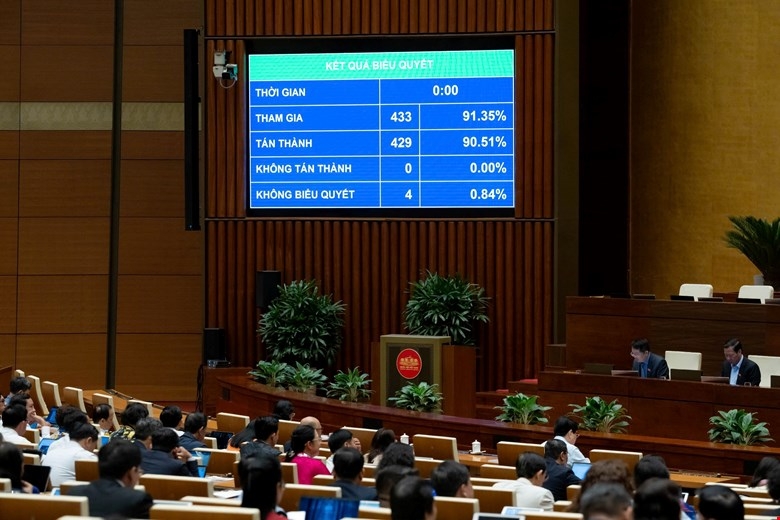
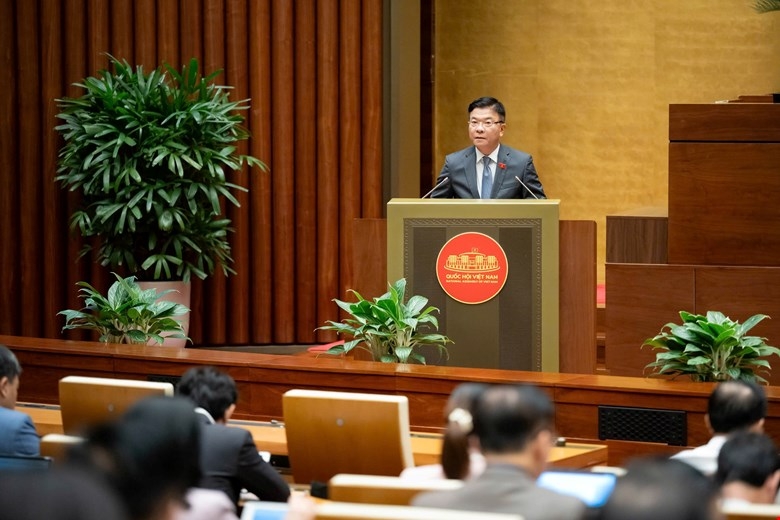
On the morning of November 13, the National Assembly passed the Resolution on the Socio-Economic Development Plan for 2016. Deputy Prime Minister Lê Thành Long presented the summary report on explanations, absorption, and revisions of the draft Resolution on the 2026 socio-economic development plan.
PROMOTING ECONOMIC GROWTH ASSOCIATED WITH MACROECONOMIC STABILITY
The Resolution on the 2026 socio-economic development plan proposes numerous practical, feasible, and comprehensive solutions across almost all fields. The Resolution clearly defines the objectives, 15 key indicators, and 11 focal tasks and solutions closely aligned with the draft documents of the 14th National Party Congress and the conclusions of the 13th Central Committee Conference.
Regarding the objective of promoting economic growth tied to macroeconomic stability, the Government continues to direct and manage synchronously, closely, and effectively macroeconomic policies and solutions across various sectors to achieve the 2026 growth target striving for 10% or higher, alongside maintaining macroeconomic stability, controlling inflation, and ensuring major economic balances.
GDP per capita is projected to reach $5,400 - $5,500 USD; the share of processing and manufacturing industries in GDP will reach approximately 24.96%; the average consumer price index (CPI) growth rate will be around 4.5%...
In this context, we will continue to implement a reasonable, focused, and targeted expansionary fiscal policy, strengthen revenue management, and ensure accurate, sufficient, and timely tax collection. We will leverage resources from the State budget in combination with social resources to effectively deploy strategic breakthroughs and the Politburo's pillar resolutions.
We will manage monetary policy proactively, flexibly, timely, and effectively, keeping interest rates and exchange rates appropriate to ensure access to capital at reasonable costs. Credit will be directed toward production, business, and priority sectors. The gold and real estate markets will be strictly managed. We will strongly develop the domestic market, promote tourism, diversify export markets, and effectively exploit signed FTAs and potential export markets.
EFFECTIVELY IMPLEMENT KEY TASKS AND SOLUTIONS
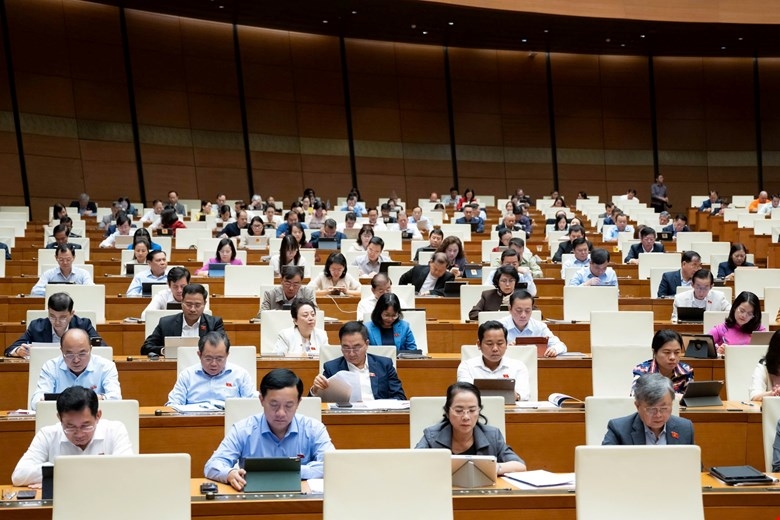
Alongside endorsing the tasks and solutions proposed by the Government, the National Assembly requests the Government and relevant agencies to effectively carry out key tasks and solutions.
One of the key tasks is to accelerate the progress of building local land databases and integrating data into the national land database; as well as to finalize and operate real estate trading floors.
Additionally, we will develop a project to fundamentally address air pollution in Hanoi and Ho Chi Minh City; continue to review and appropriately adjust the roadmap for applying emission standards and regulations for motor vehicles currently in circulation in Vietnam…
Furthermore, it is necessary to continue developing production and service industries in a modern direction. By 2026, the value-added proportion of the digital economy is projected to account for about 14% of the country's GDP. The central budget will focus on investing in national key projects, large-scale works and projects with inter-regional, inter-national, and international connectivity; local budget investments will focus on inter-provincial and inter-district projects; ensuring targeted, effective investments with high spillover effects, resolutely avoiding dispersion and fragmentation.
Focus on investment in construction, ensuring the progress of synchronized, modern, smart, national and international strategic infrastructure projects. Especially key transportation projects, railway systems, international airport systems, seaport systems, and energy infrastructure. Promote the development of inter-regional projects, major urban infrastructure, and digital transformation infrastructure; adjust planning to suit the new context.
Regarding the synchronous completion of institutions and laws, focusing on investment and business laws to unleash productive forces, mobilize all resources, and create new momentum for development.
In the fields of culture and society, it is necessary to focus on improving the capacity of the healthcare system; promote the Project of building 1 million social housing units; strive to complete over 110,000 units by 2026.
Regarding perfecting the organization of the state administrative apparatus, it is necessary to evaluate civil servants based on criteria of task performance results (KPIs). Effectively implement mechanisms to attract high-quality human resources and policies for talented individuals.